

Imagine surviving one cancer to then be diagnosed with late stage lung cancer.
For those who have been successfully treated for Hodgkin lymphoma – the most common cancer in children – lung cancer is one of the leading causes of death.
Researchers at the University of Manchester were intrigued by this and so applied for one of our research grants to investigate further, with the long term aim of expanding the screening criteria to include Hodgkin lymphoma survivors.
With our funding, the team completed the largest pilot of lung cancer screening for Hodgkin lymphoma survivors (102 participants). Through the study, two asymptomatic patients were diagnosed with small cell lung cancer, one of whom, Tim Boon, had early-stage disease and underwent curative-intent surgery and chemotherapy.
Education materials have now been developed to communicate lung cancer risks to the wider Hodgkin lymphoma population and participants of the trial will continue to be followed up, with ongoing access to support as required.
Off the back of the pilot, the team met with Professor Anne Mackie, director of screening for public health screening and Dr. David Fitzgerald, programme director for the NHS cancer programme, to discuss expanding existing screening to include high risk Hodgkin lymphoma survivors.
“Professor Mackie and Dr. Fitzgerald were fully supportive of the concept of targeted lung cancer screening for high risk HL survivors,” explains Dr Kim Linton, principal researcher for the project. “They have encouraged us that ongoing research in this field would inform further healthcare policy.
“I’m delighted to say that thanks to the original grant from Roy Castle Lung Cancer Foundation, we have now secured funding for a further five years to continue our work into the development of a national lung cancer screening programme for Hodgkin lymphoma survivors.”
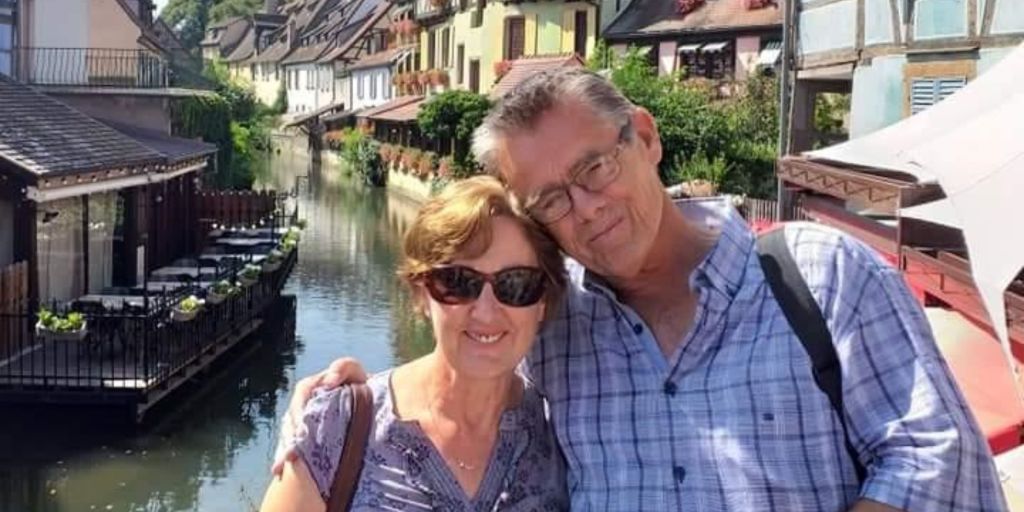
“I was diagnosed with Hodgkin lymphoma when I was 23,” recalls Tim Boon, one of the participants in the study.
Despite being diagnosed with late-stage disease, my oncologist, Professor Derek Crowther, had been incredibly optimistic about my treatment. And he was right – over 40 years later, I am still here.
It wasn’t exactly plain sailing. I underwent numerous surgeries, and the chemo was very harsh. It was in the 70s. There were no anti-emetic treatments, so it took its toll, but I got through it and life carried on. I completed my training as a psychiatric nurse and my wife gave birth to our beautiful son, David.
Fast forward a few decades and I received a letter inviting me to take part in this new research study involving HL survivors. At that point, I had no knowledge of the link between Hodgkin lymphoma and lung cancer, so I agree to take part without any concerns.
I felt fine and had no symptoms; I took part because The Christie had been so good to me through my earlier treatment, I wanted to help them with this.
My scan showed there were nodules on my left lung. The nodules were minute but, given my history, I feared the worst. I had a follow up scan a few months and my fears were confirmed; the nodules had grown at staggering speed and the doctors were certain of malignancy.
From there, it was a bit of a whirlwind – lung function tests, PET scan and surgery to remove the upper lobe of my left lung, after which my diagnosis was confirmed – small cell lung cancer. I then had four cycles of chemotherapy and I’m pleased to say I tolerated this so much better than before.
Since my diagnosis, I have read up on small cell lung cancer and I count myself so lucky to have been part of this study.”
I don’t mean to sound bleak but, if it hadn’t been for this intervention, I would probably be dead now. The speed in which the nodules grew was astonishing. They would have continued to grow and likely spread, so I am very grateful to Roy Castle Lung Cancer Foundation for funding this study and for the team at The Christie. I have no doubt it has saved my life.
